

VIDEO HAS BEEN REMOVED, LINK IS FOR ARCHIVE PURPOSES: https://youtu.be/ORM-rGHdW9M
Next News Network speaks with Jason Fyk, a social media freedom advocate, who claims Section 230 is unconstitutional because it denies ‘due process’, and may have the lawsuit that brings down big tech.


Jason Fyk appears on the Dr. Gina show discussing his upcoming 5th Amendment Constitutional challenge of section 230. (Fast forward to 7:30 for Jason Fyk’s segment.)

EP 164, The Scalpel With Dr. Keith Rose
In this episode of The Scalpel, Dr. Rose is joined by Jason Fyk. Jason had built an audience on Facebook of over 38 million followers, only to have them taken away by Facebook. In this discussion, Fyk explains what happened, how it happened, Section 230, and the silver-bullet case law that can end big tech’s tyranny and restore freedom online.
Many would have you believe that Section 230 is “settled law”, especially the “tech oligarchs” and their “online minions”. They have motive to advocate in this way. But how can Section 230 be “settled law” if the United States Supreme Court has never interpreted the statute? In January 2021, the Supreme Court had the opportunity to do just that with Fyk v. Facebook, but unfortunately, it declined to hear my case.
You may have your own opinion as to what Section 230 of the Communications Decency Act (CDA) really is, and maybe why you believe it is unconstitutional or not. The most commonly cited concerns include censorship and antitrust behavior. However, both sides of the political aisle take up issue with this statute’s unfettered regulatory discretion. Regardless of your position on this law, it is about time we resolve the confusion and determine the correct interpretation of this law.
Ironically, the adjudication of Section 230 should be fairly straightforward. However, it has been interpreted and applied in any way but, straightforward. As Justice Thomas noted in the 2020 case Enigma v. Malwarebytes, there is a lot of “questionable precedent” surrounding the proper interpretation of Section 230. This lack of clarity of such an important legal statute is not healthy.
Most of us correctly recognize that Section 230 is a civil liability protection. However, others would have us believe it is instead a protection of the First Amendment, which is simply not the case. Rights in this nation are ensured first and foremost by the Constitution, which is considered superior to any subsequent law. Service providers (or anyone for that matter) had their First Amendment right to host or remove content before Section 230 was enacted and they still have their First Amendment right after Section 230 became law. The only legal contribution, with the enactment of Section 230, was the civil liability protection and regulatory authority granted by the United States government.
But what does this “protection” entail? In order to properly understand Section 230, we need to look at the law’s origin. But, you may be thinking, “oh, these laws came into play circa 1996”, and here, you would be wrong. To understand this law, we must look back even further. In fact, we must look all the way back to the origin of the earliest independent regulatory agency, the United States Postal Service (USPS). Besides being enacted as an agency, even before the United States officially declared independence from Britain, “[i]t is one of the few government agencies explicitly authorized by the United States Constitution… The Postal Service is legally obligated to serve all Americans, regardless of geography, at uniform price and quality.” (Wikipedia – USPS) The USPS remains unique to this day as one of less than seventy independently operated agencies authorized by the United States.
Along with the responsibility of being an official government agency, certain specific rules apply to government appointed regulatory commissions. For example, why is the USPS “obligated” to “serve all Americans” and why must the price and quality be “uniform”? To answer these questions, we must consider Congress’ delegation of authority granted to the USPS. According to the Cornell Law School’s Legal Information Institute: “The non-delegation doctrine of the United States Constitution is a principle in administrative law that Congress cannot delegate its legislative powers to other entities. This prohibition typically involves Congress delegating its powers to administrative agencies or to private organizations”. So, we see, the Constitution expressly forbids Congress from delegating “legislative powers to other entities”, yet, as we also see, such delegation happens all the time.
If Congress “cannot delegate its legislative powers”, then how is Congress’ delegation of authority to the USPS Constitutional? The 1928 case of J. W. Hampton, Jr. & Co. v. United States [held] “that Congressional delegation of legislative authority is an implied power of Congress that is constitutional so long as Congress provides an ‘intelligible principle’… So long as Congress ‘shall lay down by legislative act an intelligible principle to which the person or body authorized to [exercise the delegated authority] is directed to conform, such legislative action is not a forbidden delegation of legislative power”.
America’s growth was likely inconceivable when the Constitution was written. The growth of the internet was equally as inconceivable when Section 230 was made law. All this considered, America’s vastness calls for regulation that far exceeds the capabilities of Congress. The United States Supreme Court recognized Congress’ inability to regulate all industries. For this reason, the Supreme Court determined that, so long as Congress laid down an easily understood obligation to uniformly serve all Americans, or an “Intelligible principle”, upon which to base its regulations, such “action is not a forbidden delegation of legislative power”.
The USPS operates under an “Intelligible Principle”, as outlined with the Universal Service Obligation, and likewise also applies to the Federal Communications Commission (FCC). According to the FCC’s official government website, “Universal Service is a cornerstone of the law that established the FCC… The Telecommunications Act of 1996 expanded the traditional goal of universal service to include increased access to both telecommunications and advanced services – such as high-speed Internet – for all consumers at just, reasonable and affordable rates”.
You may be asking yourself, what does all this Constitutional mumbo-jumbo have to do with Section 230? Well, Section 230’s regulatory authority also came with a Congressionally delegated “Intelligible Principle”. The “Good Samaritan” provision of the Communications Decency Act is the “easily understood obligation to uniformly serve all Americans”, as expressed in Section 230(c). Yes, Section 230 is a Congressional delegation of (regulatory) authority, just like the USPS and the FCC were granted, which must be predicated on uniform enforcement and service to the public interest.
Have service providers regulated content uniformly and have they done so in the public interest? I believe I can answer that question for many of us with an emphatic, “no”! So, why has Section 230 not been uniformly enforced or enforced in the public interest? The answer is the following: unlike official regulatory agents (USPS or FCC), who adhere to objective guidelines, Section 230’s authority was granted to private entities who have no discernable guidelines. Without objective guidelines or congressional oversight, private entities inevitably create and enforce regulatory code in their own interests.
In its 1936 decision of Carter v. Carter Coal Mining inc., the Supreme Court held that Congress’ delegation of authority to the commission (private entities) was unconstitutional because it conferred power not to an official body “but to private persons whose interests may be and often are adverse to the interests of others in the same business.” Id. at 311. While the Court struck down the delegation by citing to the Fifth Amendment’s Due Process Clause,the nondelegation doctrine loomed largely in the background of the decision, with the Court calling Congress’ actions “legislative delegation in its most obnoxious form.”
Under Congress’ section 230 delegatory authority (civil liability protection), private companies like Google, Facebook and Twitter have the power to create and enforce any legislative regulatory code (Community Standards) they deem “in the public interest”, without any Congressional guidelines or oversight. How does this work? According to longstanding Administrative Law, “Agencies are delegated power by Congress… to act as agencies responsible for carrying out certain prerogative of the Congress [here, blocking or screening of offensive material]. Agencies are created through their own organic statutes [here, Section 230], which establish new laws [here, regulatory/community “standards”], and doing so, creates the respective agencies to interpret, administer and enforce those new laws. Generally, administrative agencies are created to protect a public interest rather than to vindicate private right”. Without objective guidelines set forth in Section 230 or Congressional oversight, the agency (here, a private business) is free to interpret (or more often misinterpret) terms such as “offensive” or “objectionable” based on their own self-interest rather than in the interest of the public.
Congress is not alone in its failure to protect the public interest. The court’s overly broad misinterpretation of the statute, has further exacerbated the problem. Referencing the principle of a “public interest” standard, Justice Scalia once noted, that “[t]his standard has effectively allowed Congress to grant administrative agencies [here, private enterprise] the authority to create any rules they deem to be in the public interest, solely relying on the agency’s own views and policy agenda rather than requiring Congress to set forth objective guidelines”. Section 230 is no exception, and in fact, Section 230 perfectly exemplifies this statement. The “agency”, (here, Google, Twitter, Facebook and others) regulate, for their own “interests, solely relying on the agency’s own views and policy agenda” fraudulently deeming their actions “in the public interest”.
Not only has Section 230 granted nearly unlimited discretion to self-interested private businesses, the courts have helped propel the problem even further. In a concurring opinion offered in the Ninth Circuit Court’s 2009 ruling of Zango, Inc. v. Kaspersky Lab, Inc, “Judge Raymond C. Fisher warned that pernicious [harmful] consequences could follow if future courts permitted online platforms to have unchecked authority to define what content is ‘otherwise objectionable’”. In explaining that, he had “anticompetitive blocking in mind”, Judge Fisher wrote that “[u]nless [Section 230] imposes some good faith limitation on what a blocking software provider can consider ‘otherwise objectionable’, or some requirement that blocking be consistent with user choice, immunity might stretch to cover conduct Congress very likely did not intend to immunize”.
In other words, Judge Fisher warned us in 2009 of potential future Section 230 abuse, if the courts failed to “impose some good faith limitations” on what content can and/or cannot be “block[ed] or screen[ed]”. He knew that the regulatory authority granted to private businesses would most likely not be consistent with user choice (“public interest”) and inevitably lead to immunity stretching beyond what Congress could have intended. As Justice Thomas noted in a statement regarding his ruling for a Section 230 case, referencing R. Smolla’s “Law of Defamation”: “[c]ourts have extended the immunity in [section] 230 far beyond anything that plausibly could have been intended by Congress”.
My lawsuit, Fyk v. Facebook asked a very simple question “…whether Facebook can, without consequence, engage in brazen tortious, unfair and anticompetitive, extortionate, and/or fraudulent practices…” In late 2019 (after my case was dismissed), the Ninth Circuit Court determined in consideration of Enigma v. Malwarebytes that “[t]he Good Samaritan provision of the Communications Decency Act does not immunize blocking and filtering decisions that are driven by anticompetitive animus”.
Again, my lawsuit was entirely about Facebook’s unlawful anticompetitive conduct. My case was a tort (tortious) claim. My case had absolutely nothing to do with treating Facebook as the publisher or speaker of my content, rather, it was entirely about addressing Facebook’s own anticompetitive blocking and filtering decisions.
In my case, and many others, the court used an outdated and overly-broad, three-part test to determine immunity. This test is so broad that it provides immunity from any and all publishing conduct so long as the content originated with a third-party.
Currently-used Incorrect Legal Test: (Barnes vs. Yahoo!, Inc.)
Immunity from liability exists for:
Quoting Barnes v. Yahoo! Inc., the 9th Circuit Court stated, “[r]emoving content is something publishers do…. It is because such conduct is publishing conduct that we have insisted that Section 230 protects from liability any activity that can be boiled down to deciding whether to exclude material that third parties seek to post online”. Consider this statement carefully, in conjunction with the court’s three-part test. If one cannot be treated as “a publisher” (so long as the content was “provided” by another), then any and all of their own publishing conduct is perforce immune, which extends well beyond just “removing content”. This interpretation of Section 230 would immunize all unlawful publishing conduct and as a result, all provisional publishing conduct such as creating and/or developing information. The three-part test is simply too vague and too broad to be adequately applied.
As Justice Thomas noted in Enigma v. Malwarebytes, “Many courts have construed the law broadly to confer sweeping immunity on some of the largest companies in the world… Adopting the too-common practice of reading extra immunity into statutes where it does not belong”. To be clear, section 230 does not protect from liability “any” publishing action. It protects, specific publishing actions when restricting content as a “Good Samaritan”, voluntarily, in good faith, uniformly when acting in the interest of the public.
As an example of the court’s overly broad misinterpretation of the statute: under Section 230(c)(1), if a service provider cannot be treated as “a publisher” (a secondary publisher) who is a publisher in addition to,“the publisher or speaker”, (the preexisting publisher)– (such is the actual language of the statute), in relation to content originating from the third party and without any measure of motive, then Section 230(c)(1) would immunize any and all of a service provider’s own unlawful secondary publishing conduct. So we see, in my case, the California courts have, as Justice Thomas warmed, “extended the immunity in [Section] 230 far beyond anything that plausibly could have been intended by Congress”.
Additionally, if Section 230(c)(1) protects all publishing functions, including “restricting access to or availability of materials”, without any measure of motive (as the California Courts wrongly believe), Section 230(c)(1) would swallow the purpose of the very next statute as well. Justice Thomas noted the same in his comments on Enigma v. Malwarebytes, “[t]he decisions that broadly interpret [Section] 230(c)(1) to protect traditional publisher functions also eviscerated the narrower liability shield Congress included in the statute [Section 230(c)(2)(A)]. Section 230 immunity needs to be put to an entirely new test. This is a narrower, more refined test I propose the courts use:
Proper (modified) Legal Test: (Fyk vs. Facebook)
Immunity from liability exists for:
Section 230 is anything but settled law. If the California courts were, for example, somehow correct about Section 230(c)(1)’s immunizing all publishing conduct without any measure of motive (so long as the content originated with a third party), then any and all unlawful publishing conduct, such as discrimination, anticompetitive conduct, election tampering, practicing medicine without a license, restricting public officials and yes, even state action would be immune from liability under Section 230(c)(1) and Section 230(c)(2) would be entirely useless. As Justice Thomas pointed out, this result cannot “plausibly [] have been intended by Congress”.
Section 230 needs to be reevaluated by the courts, despite them failing to take that opportunity with my case. There is reason to believe this could happen soon. For example, just recently, the 2nd Circuit Court of Appeals agreed to hear the dispute Domen v. Vimeo, a Section 230 case based on sexual orientation and religious discrimination. This case’s outcome will have direct impact on my case, because if somehow my court was correct in its interpretation that Section 230(c)(1) protects all publishing conduct without any measure of motive, then discriminating based on sexual orientation or religion would be immune. I doubt that Congress’ intention for section 230 was intended to immunize sexual and religious discrimination, “solely relying on the agency’s own views and policy agenda”.
The important questions I leave with you. Do you believe it was Congress’ intention to immunize any and all publishing conduct, including that which is unlawful, such as political censorship, market manipulation, , discrimination, anticompetitive conduct or elicit a medical response, simply because it occurred within the ether of the internet? And do you truly believe Congress intended to hand off its own duties, such that it is relying on a competitive private entity’s own discretion, views and policy agenda to make moral and fair decisions for its users? I would like to hope that we might have some better clarity on these questions soon.

WATCH HERE: https://www.steeltruth.com/?wix-vod-video-id=7fbf854e9b484b48a0102051bcd99dfe&wix-vod-comp-id=comp-kl5lh1zq

BY COL. ROB MANESS
01 JULY, 2021 / 04:35CDT
Facebook, Twitter, and Google currently enjoy immunity from lawsuits even though they actively censor speech, suppress voices of competing publishers, and willfully defame American citizens and entities by tagging them as purveyors of false information even when the facts don’t support it. Meanwhile the debates rage about what to do in government and among conservative legal advocates, a lot of talk but very little to no action being taken to end this oppression of rights. But my guest today is taking this fight to the Oligarchs and we get to learn why they can be defeated. Jason Fyk is fighting for America against big tech, almost single handedly, in what could be considered one of the most important real-life David vs. Goliath battles.

Fyk is encouraged by the most recent ruling by the 9th Circuit Court, which causes a conflict with other rulings, and which is the foundation for this update to his case.
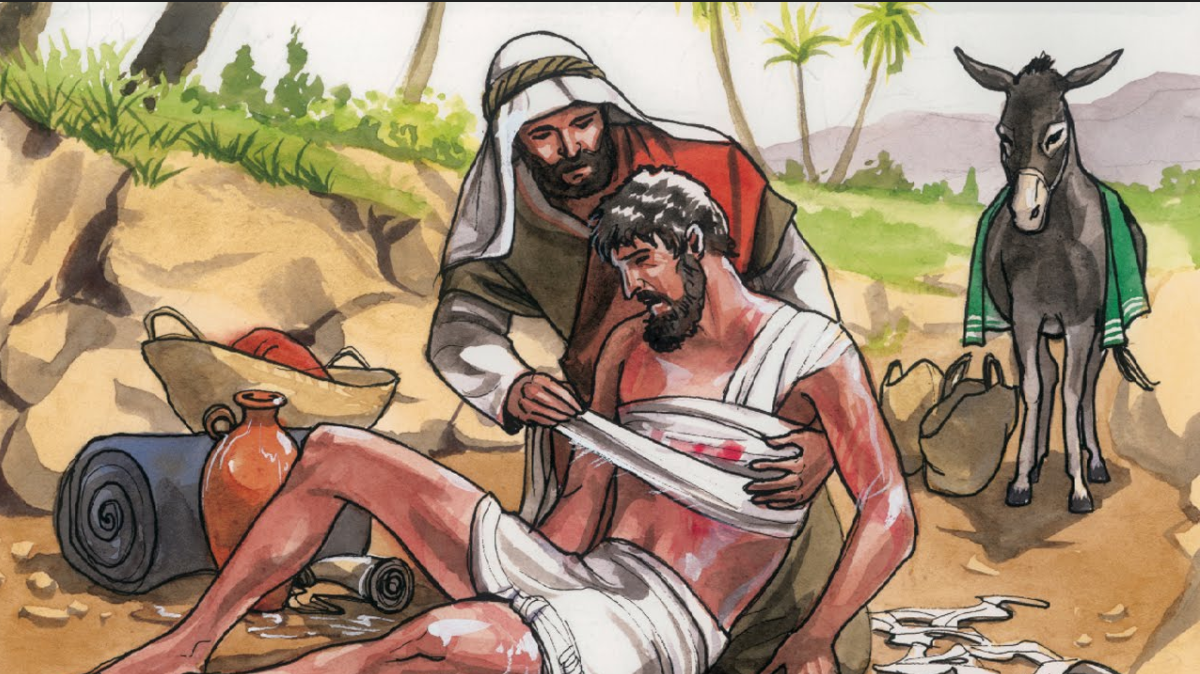
Snapchat created a speed filter which rewarded a user with new filters based upon how fast they were moving. Someone used the filter at 120mph and ended up crashing, killing themselves and two children. The family sued for negligence. Snapchat attempted to invoke 230(c)(1) immunity claiming they can not be treated as “the publisher” for their own negligent conduct. (This is the same defense Facebook used in Fyk vs. Facebook in regards to anticompetitive conduct-both of which are illegal).
The 2nd Circuit Court determined that Section 230(c)(1) does not provide Snapchat 230 protections for negligence conduct. The 9th Circuit in Enigma vs. Malwarebytes came to a similar conclusion stating, “the “Good Samaritan” provision of the Communications Decency Act does not immunize blocking and filtering decisions based upon an anticompetitive [motivation].” Some so-called section 230 experts called the Enigma decision a fluke, even one self-proclaimed 230 expert (Eric Goldman) claimed “Justice Thomas Writes a Misguided Anti-Section 230 Statement “Without the Benefit of Briefing”–Enigma v. Malwarebytes.”
Justice Thomas’ Enigma statement, regarding section 230, was neither a fluke nor “misguided”. It is quite the opposite. As Justice Thomas accurately pointed out, “[t]his modest understanding [CDA Section 230] is a far cry from what has prevailed in court. Adopting the too-common practice of reading extra immunity into statutes where it does not belong.” Courts have granted “extra immunity” for a service provider’s own illegal misconduct not for the content. Justice Thomas noted the same, “(stating that §230 should not apply when the plaintiff sues over a defendant’s “conduct rather than for the content of the information”). My case addressed all of this and we seemed to be the “appropriate case” and briefing but unfortunately the Supreme Court denied our petition for writ of Certiorari.
Recently, we (myself and Callagy law) filed a motion 60b in the Northern District Court based upon new Enigma precedent, Justice Thomas’ Enigma Statement and now we have the 2nd Circuit Snapchat decision which all conflict with my judgement. We had asked a simple question, could Facebook engage in otherwise illegal anticompetitive editorial misconduct when restricting materials?
Our 9th Circuit panel said YES because 230(c)(1) provides Facebook protections from being treated as “a publisher” [*not “the publisher” such is the actual language of 230(c)(1)] and that “nothing in 230(c)(1) turns on the alleged motive for removing content.” In other words, 230(c)(1) is sovereign immunity from all illegal conduct. They were wrong.
In contrast, only four months later the 9th Circuit in Enigma vs. Malwarebytes (albeit a different 9th Circuit Court panel), rendered the exact opposite decision stating the “Good Samaritan” provision of the Communications Decency Act does not immunize blocking and filtering decisions based upon an anticompetitive [motivation].” This decision cannot legally coexist with or be reconciled with the Fyk vs. Facebook decision. I was denied Due Process.
The motivation behind any conduct or absence of conduct (action or omission) matters at the onset of litigation! The question is why?
The “Good Samaritan” provision of the CDA is what’s called the “intelligible Principle” upon which a quasi-legislative entity must base its regulations. “In J.W. Hampton v. United States, 276 U.S. 394 (1928), the Supreme Court clarified that when Congress does give an agency the ability to regulate, Congress must give the agencies an “intelligible principle” on which to base their regulations. This standard is viewed as quite lenient, and has rarely, if ever, been used to strike down legislation.” (Cornell law Nondelegation Doctrine)
The “Good Samaritan” provision of the Communications Decency Act (Section 230) is the Intelligible basis upon which all regulatory actions or omissions MUST be predicated to avoid contributory negligence. As described in Fyk vs. Facebook, the “Good Samaritan” provision is “for the good of others or society, in good faith, not for compensation, without gross negligence or wanton and willful misconduct.” Negligence and Anticompetitive conduct is not the conduct of a “Good Samaritan” In other words, the “Good Samaritan” motivation matters at onset of any Section 230 litigation.
Fyk vs. Facebook went all the way through the California courts and eventually petitioned the Supreme Court of the United States, even though 230 is a matter of national importance and Justice Thomas himself welcomed an appropriate case, the Supreme Court did not hear our case which addresses all of the principles of Section 230.
We recently filed a motion 60b in the Northern District of California, asking the court to vacate its prima facia wrong decision based upon the new Enigma vs. Malware bytes precedent. We may file a supplemental brief based upon the new Snapchat decision which proves the intelligible principle (Good Samaritan) must apply for the law to be Constitutionally Sufficient.
Ultimately, the Fyk vs. Facebook case should surpass dismissal, if not in the District Court, then in the 9th Circuit on appeal and if not in the 9th Circuit, we will once again petition the Supreme Court, a second time. Unlike our first attempt we now have new law, a matter of national importance and a Circuit Court conflict. It is my fervent hope the Supreme Court United States one day hears our “appropriate case” and helps to resolve this matter of national importance.
If that still fails then we will be forced to challenge the Constitutionality of Section 230 by suing the United States itself over Due Process violations under void for vagueness and or the Nondelegation doctrine. “Under [the] vagueness doctrine, a statute is also void for vagueness if a legislature’s delegation of authority to judges and/or administrators is so extensive that it would lead to arbitrary prosecutions.” If my judgement stands, Section 230 has led to arbitrary prosecutions (arbitrary enforcement of 230 regulations) whereby my judgement directly conflicts with the Malwarebytes and the Snapchat decisions and the opinion of at least one Supreme Court Justice.
In summary, Section 230 is a quasi-legislative, Congressional delegation of function, to an independent agency, granting the authority to self-regulate offensive materials in good faith, predicated on the “Good Samaritan” intelligible Principle.
If the “Good Samaritan” provision is not considered the intelligible Principle, 230 is thereby unconstitutional under the nondelegation doctrine and/or if 230 leads to arbitrary regulation it is unconstitutional under the void for vagueness doctrine. The “Good Samaritan” principle must apply to all regulatory decisions uniformly (aka neutral public forum), including in my case (Fyk vs. Facebook) or I will be forced to challenge Section 230’s Constitutionality. I have not been afforded a single day in court, yet I have been proven to be right all along. That is extraordinary!
In conclusion, Section 230 is not necessarily broken, it is too vague, misunderstood, misinterpreted and misapplied by the courts but I intend to “FYK-s” section 230 and have recently proposed a legislative amendment to prevent any further confusion with Section 230 in the future. Section 230 does not need to be rewritten; it needs to be clarified and understood.
For more information and the proposed legislation see: https://jasonfyk.medium.com/does-section-230-provide-different-immunity-for-facebook-rather-than-malwarebytes-cb4415c77122

Courts have often applied a three-part legal test which originated in Barnes vs. Yahoo. The test was made to determine whether a lawsuit satisfies Section 230(c)(1)’s “Treatment of publisher or speaker”. Unfortunately, the three-part test, currently used by the courts in the wake of the Barnes case, lacks critical elements. Here, the 9th Circuit court failed to recognize the statutory conflict created between 230(c)(1) and 230(c)(2) when “the publisher” is converted into “a publisher”.
This three-part test mistakenly prevents a service provider from being treated as “a publisher” of third-party materials even when the provider becomes “a publisher” in an active secondary publishing capacity. This miniscule mistake had a tremendous effect on Section 230 protections. Section 230(c)(1) has been misinterpreted to mean a service provider cannot be treated as “a publisher” in any capacity, so long as the content originated from a third party, even when the provider is itself acting as a secondary publisher of the content. Section 230(c)(1) essentially became immunity from all publishing conduct.
We know this is wrong because if a provider cannot be treated as a publisher in any capacity so long as the content originated from a third-party and “publication involves reviewing, editing, and deciding whether to publish or to withdraw from publication third-party content” (see Roommates) then section 230(c)(2)’s active publishing civil liability protection would be rendered entirely superfluous as noted in Fyk v. Facebook and as noted by Justice Thomas noted in Enigma v. Malwarebytes.
The court’s misconception that a “separate grant of immunity” is provided by 230(c)(2) “perhaps because [the provider] developed, even in part, the content at issue can take advantage of subsection (c)(2)” is plainly wrong. If a provider cannot be treated as a publisher under 230(c)(1) and “develop[ment], even in part” is publishing conduct, then 230(c)(1) would swallow “develop[ment], even in part” as well thus the court’s example is moot.
Besides the court’s misunderstanding of 230(c)(1) and the court’s misunderstandings surrounding 230(c)(2)’s additional protections, the court also believes that “nothing in Section 230(c)(1) turns on the alleged motive for removing content”. First off, Section 230(c)(1) does not protect any publishing conduct taken by the provider. Secondly, despite the courts assertion, motive matters at the 230(c) “Good Samaritan” threshold. “Good Samaritan” is the Intelligible Principle upon which all regulations must be based “in the public interest”.
To resolve any further confusion and to properly apply Section 230(c)(1)’s “Treatment of provider or speaker” the courts should modify it’s three-part test into a five-party test which properly assess whether a suit is or is not protected by Section 230(c)(1).
Incorrect legal test: (Barnes vs. Yahoo, Inc)
Immunity from liability exists for:
Correct (modified) legal Test: (Fyk vs. Facebook)
Immunity from liability exists for:
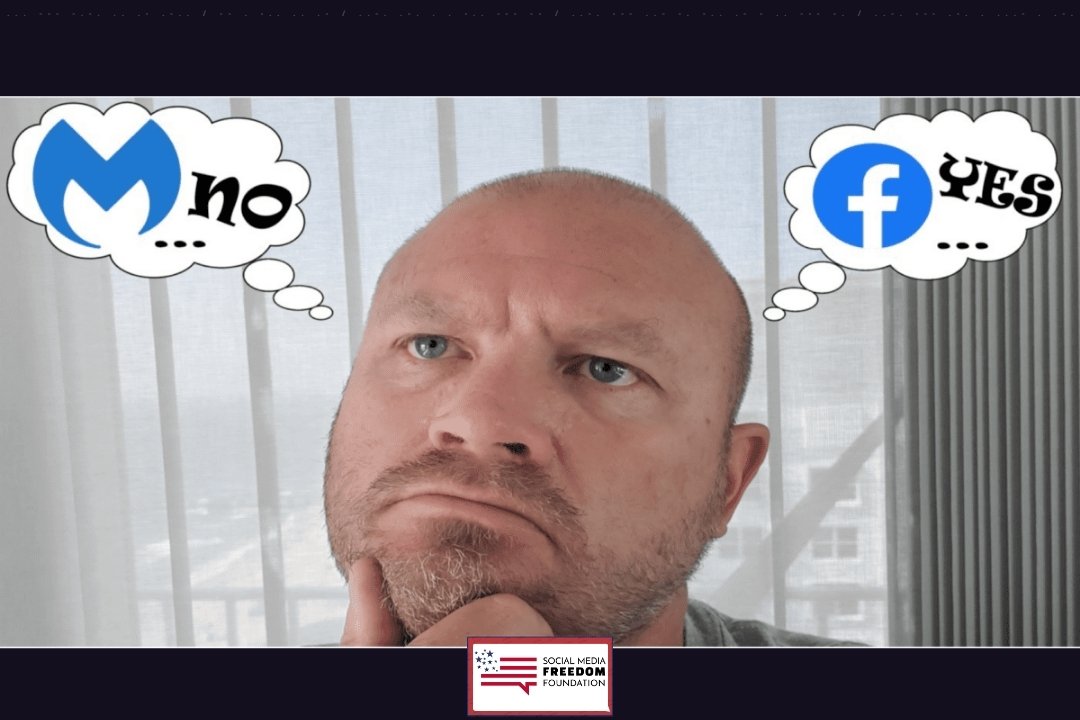
Most, if not almost all courts, have relied on “questionable precedent” when considering Section 230 immunity. Courts have consistently rendered inconsistent decisions that are both legally and logically inappropriate, the Fyk vs. Facebook decision being one of them. Specifically, Section 230 DOES NOT in fact, “protect[] from liability any activity that can be boiled down to deciding whether to exclude material that third parties seek to post online” (per 9th Circuit). More specifically Section 230(c)(1) DOES NOT immunize ANY or ALL editorial decisions without regard for motive. We demonstrated this principle throughout our briefs but the courts simply ignored how Section 230 must work for the law itself to be harmonious as discussed in more detail here (Section 230 — “A” Decision That Could Change “The” Social Media World). The problem is not as much Section 230 is wrong but instead the inappropriately broad application and cursory adjudication by the courts themselves has destroyed the proper application of Section 230.
Justice Clarence Thomas on the other hand, was not as misled. On October 13, 2020 Justice Thomas rendered an advisory opinion and undertook a substantial analysis of Section 230’s application in the Enigma vs. Malwarebytes denial of Certiorari which raised most, if not all, of the same legal questions and concerns we raised in our court briefing.
Justice Thomas noted: “…Courts have [] departed from the most natural reading of the text by giving Internet companies immunity for their own content (and/or conduct). …Courts have long emphasized non-textual arguments when interpreting §230, leaving questionable precedent in their wake. …[I]n an appropriate case we should consider whether the text of this increasingly important statute aligns with the current state of immunity enjoyed by Internet platforms. …[I]n the 24 years since, we have never interpreted this provision. But many courts have construed the law broadly to confer sweeping immunity on some of the largest companies in the world.”
Put more simply, Courts have not applied Section 230 as written, leaving inaccurate decisions behind which will impact future litigation. Decisions which have allowed overly broad immunity while denying almost everyone any potential hope of their day in court. Courts have consistently been granting immunities to service providers which do not exist within the actual language of Section 230.
Justice Thomas noted the same, “[a]dopting the too-common practice of reading extra immunity into statutes where it does not belong.”
Once again, Section 230 itself, is not the main issue at hand, it is the court’s misinterpretation and misapplication of the statute. Put even more simply, Section 230 would work if the courts read the actual text as written and properly apply what the text of Section 230 truly says. For example, Section 230(c)(1) does not say one can not treat a service provider as “a publisher” it says one cannot treat the provider or user as “the publisher”. “The publisher” being the primary publisher and “a publisher” being a secondary publisher in addition to “the publisher”. In other words, you can’t be treated as someone else for their misconduct. That seems self-evident, yet the courts missed the mark entirely.
In 2018, we (Fyk with the help of Callagy Law) sued Facebook for Tortious interference, Fraud, Extortion, and Unfair Competition. Question one on page one of our original complaint plainly asked the courts, “…whether Facebook can, without consequence, engage in brazen tortious, unfair and anti-competitive, extortionate, and/or fraudulent practices…”
The question was very straight forward and should be easy to answer. Put another way, can Facebook make any editorial decision it wants based upon an illegal anticompetitive motivation? The answer should simply be no however, the courts failed to distinguish between publisher content liability and a service provider’s own unlawful conduct (Facebook’s anti-competitive misconduct).
Similarly, Justice Thomas noted in Enigma, “…plaintiffs were not necessarily trying to hold the defendants liable “as the publisher or speaker” of third-party content, §230(c)(1). Nor did their claims seek to hold defendants liable for removing content in good faith, §230(c)(2). Their claims rested instead on… defendant’s own misconduct.”
Justice Thomas recognized the difference between suing the provider as “the publisher” for the actions of another to publish content [as it relates to 230(c)(1)], suing the provider for acting as “a publisher” removing materials in good faith [as it relates to 230 (c)(2)] and when a plaintiff sues over illegally motivated misconduct [as it relates to 230(c)]. Traditionally, the courts have failed to properly apply Section 230(c) “Good Samaritan” principles at the onset of dismissal consideration.
Taken directly from our motion for rule 60(b): “This court correctly noted in its Order Granting Motion to Dismiss, “immunity, “like other forms of immunity, is generally accorded effect at the first logical point in the litigation process” because “immunity is an immunity from suit rather than a mere defense to liability.” Nemet Chevrolet, Ltd. v. Consumeraffairs.com, Inc., 591 F.3d 250, 254 (9th Cir. 2009). Enigma’s new 230(c) precedent “Good Samaritan” standard is “the first logical point” to determine 12(b)(6) immunity. The question the courts must now ask at the 230(c) threshold; did the interactive computer service provider act as a “Good Samaritan” in its decisions to block or screen materials?”
Did the Provider act as a “Good Samaritan” should have been the very first question asked in my lawsuit and every other lawsuit to follow when considering Section 230’s 12(b)(6) dismissal. Unfortunately, that question was not asked by the courts and my lawsuit was dismissed based on the very same “non-textual” “questionable precedent” Justice Thomas noted. We then filed a petition to the Supreme Court, specifically quoting Justice Thomas’ own words, but the Supreme Court declined to hear the case. My lawsuit was never properly adjudicated since the new precedent arrived after our decision but during the petition stage. At the time, we didn’t know whether to move forward to the Supreme Court or backwards to the District Court. It was at the very least an extraordinary circumstance. With that said, we have not yet conceded defeat. Our legal argument and interpretation of Section 230 was proven to be accurate and the decision to be unjust by both Justice Thomas’ opinion and the new Enigma legal precedent.
During our proceedings, the lower courts did not have the benefit of considering the Enigma judgement since it was not finished until October 13, 2020, well after our hearings had concluded on June 12th 2020. If applied properly and justly, the Enigma decision should fundamentally change the outcome of our dismissal decision and serve to maintain judicial uniformity.
1. Facebook did not qualify as an “information content provider” [as defined in 230(c)(1)] when developing Fyk’s content “in part” [insignificant manipulation] stating, “Fyk,… d[id] not identify how Facebook materially contributed to the content of the pages.”
2. Fyk sought to hold Facebook liable as “a publisher” stating, “[Fyk] has also not challenged the district court’s determination that his claims seek to treat Facebook as a publisher (in addition to “the publisher”- Fyk) and has therefore waived that issue.”
3. Facebook can take “any action” under 230(c)(1) (despite motive) as “a publisher” to exclude materials stating, “[R]emoving content is something publishers do… It is because such conduct is publishing conduct that we have insisted that section 230 protects from liability any activity that can be boiled down to deciding whether to exclude material that third parties seek to post online.”
4. Section 230(c)(1) has no provision for editorial motivation stating, “nothing in § 230(c)(1) turns on the alleged motives underlying the editorial decisions of the provider of an interactive computer service.”
1. A simple textual read of 230(f)(3) provides no measure of substantial or “material contribution” to the creation or development of information. In fact, the words “in part” imply just the opposite whereas the development contribution need only be an insignificant portion or involvement. As Justice Thomas noted, “[C]ourts wrestle[d] with the language in §230(f)(3) suggesting providers are liable for content they help develop “in part.” To harmonize that text with the interpretation that §230(c)(1) protects “traditional editorial functions,” courts relied on policy arguments to narrowly construe §230(f )(3) to cover only substantial or material edits and additions.”
2. A simple textual read of 230(c)(1) states that a service provider cannot be treated as “the publisher” not “a publisher.” In this circumstance, the courts converted “the” into “a” which mistakenly grants a service provider carte blanche protection for any of its own publishing conduct rather than for the publishing conduct of “the publisher” (another). Thomas noted, “One source respectively refers to them as “primary publishers” and “secondary publishers or disseminators,” explaining that distributors can be “charged with publication.”
3. If a service provider cannot be treated as “a publisher” under 230(c)(1), it renders 230(c)(2)(a) superfluous, since removing content is something “a publisher” does which is the purpose of 230(c)2(a). Justice Thomas noted “The decisions t[o] broadly interpret §230(c)(1) to protect traditional publisher functions also eviscerated the narrower liability shield Congress included in the statute. Section 230(c)(2)(A)”. The courts have failed to properly identify who “the publisher” refers to in 230(c)(1) and is the cornerstone misinterpretation from which Section 230 immunity begins to disharmonize.
4. Besides 230(c)(1) being misapplied to any / all publishing activity (when 230(c)(2) should actually apply), 230(c)(1) has no measure of “good faith”, thus “any activity (as “a publisher”)that can be boiled down to deciding whether to exclude material that third parties seek to post online”, including otherwise unlawful activity such as anticompetitive behavior, would be otherwise immune from liability, simply because it exists within the ether of the internet. The Enigma decision “eviscerated” this court’s 230(c)(1) immunity determination and Justice Thomas noted, “Enigma sued Malwarebytes, alleging that Malwarebytes engaged in anticompetitive conduct… The Ninth Circuit relied heavily on the ‘policy’ and ‘purpose’ of §230 to conclude that immunity is unavailable when a plaintiff alleges anticompetitive conduct.” …“The Good Samaritan provision of the Communications Decency Act does not immunize blocking and filtering decisions that are driven by anticompetitive animus.” (Facebook’s own anti-competitive misconduct)
On October 13, 2020, Enigma successfully surpassed Malwarebytes 12(b)(6) motion to dismiss as affirmed by the Supreme Court. The Enigma decision is diametrically opposed to and cannot be reconciled with the Fyk vs. Facebook the decision. Either a service provider cannot be treated as “a publisher” under any circumstance regardless of motive as determined in the Fyk case or contrarily the motive matters at the “Good Samaritan” threshold, regardless of whether the service provider acted as “a publisher”? Put simply, these two decisions directly contradict and cannot co-exist within Section 230 protections.
Fyk vs. Facebook was entirely predicated on Facebook’s anticompetitive motivation to fraudulently block or filter my content, then actively develop (solicit, expound, make available, modify, manipulate, advance or promote the growth of material especially by deliberate effort over time) my content “in part” as “a secondary publisher” in addition to myself (“the primary publisher”) for a higher valued partner, thus confirming beyond any doubt that the decision to remove the content in the first place was not made in “good faith” as a “Good Samaritan”. As Justice Thomas cited in the Enigma decision, “some courts have misconstrued [230] to give digital platforms immunity for bad-faith removal of third-party content. That is exactly what happened here.
Not only was the allegation of anticompetitive behavior made in Fyk vs. Facebook but the allegation was openly acknowledged by the courts stating, “[t]hat Facebook allegedly took its actions for monetary purposes does not somehow transform Facebook into a content developer.”
Although the courts are correct in that the monetary motivation does not make Facebook a “developer” necessarily, the courts did however concede that the anticompetitive conduct allegation was in fact made and if the courts are to consider the allegations to be true and in the most favorable light of the plaintiff the judgment must be vacated because it is plainly wrong.
We have recently filed a Rule 60(b) motion. In that motion, we presented the Northern District court a Catch-22 decision. If being a publisher renders the motive irrelevant but motive renders being a publisher irrelevant, how does the court plan to reconcile these two decisions? One of the decisions (Fyk vs. Facebook) must be wrong and If the courts do not vacate the Fyk judgement, based on the new Enigma “Good Samaritan” motivation precedent, it raises additional Section 230 Constitutional Due Process claims against the United States since I have not received equal protections under the law. Put simply, the courts aren’t doing their job properly because “the state must respect all legal rights that are owed to a person” thus they are denying me Due Process under Section 230’s arbitrary protections.
Throughout our proceedings, we maintained Section 230 has been misinterpreted, misunderstood, and misapplied by the courts, granting what is essentially carte blanche / sovereign immunity in many cases. Justice Thomas raised the very same concerns. The courts have consistently and inapplicably misconstrued Section 230(c)(1) broadly and conversely, Section 230(f)(3) narrowly, “[a]dopting the too-common practice of reading extra immunity into statutes where it does not belong.”
This courts ambiguous interpretation and arbitrary application of Section 230 protections calls into question whether Section 230 is unconstitutional under Article 1 of the 14th Amendment, “nor shall any State … deny to any person within its jurisdiction the equal protection of the laws.”
For example: (Void for Vagueness Doctrine)
“Under [the] vagueness doctrine, a statute is also void for vagueness if a legislature’s delegation of authority to judges and/or administrators is so extensive that it would lead to arbitrary prosecutions.” Here Section 230’s vague misapplication is so extensive (broad) it has led to arbitrary legal proceedings and protections.
For example: (Non-Delegation Doctrine)
“[Q]uestions of constitutionally improper delegations of powers of any of the three branches of government to either of the other, to the administrative state, or to private entities[]”whereby “one branch of government must not authorize another entity to exercise the power or function which it is constitutionally authorized (or not authorized) to exercise itself. (see also A.L.A. Schechter Poultry v. United States) Here, the government has delegated the power to restrict materials under the protection of law, a function by which the government is not permitted to do itself.
As Justice Thomas noted and recently (April 5th, 2021) decided in (JOSEPH R. BIDEN, JR., PRESIDENT OF THE UNITED STATES, ET AL. v. KNIGHT FIRST AMENDMENT INSTITUTE AT COLUMBIA UNIVERSITY), “A “private entity is not ordinarily constrained by the First Amendment, it is if the government coerces or induces it to take action the government itself would not be permitted to do, such as censor expression of a lawful viewpoint.” In other words, if private entities are suppressing free speech, the government does not have the authority to delegate such a function to a private entity under protection of law which the government does not have the authority or permission to do itself. Section 230 is thereby unconstitutional. Granting such a function to another entity would simply be an extended functional arm of the government (via Section 230 legal protections) to “coerces or induce[]” such a function that it would otherwise not be permitted to do itself.
My personal lawsuit and any other lawsuit (including ones that may arise in the future) must surpass Section 230’s motion for 12(b)(6) dismissal. Leaving the Fyk decision stand, creates conflicting precedent with the Enigma decision within the 9th Circuit Court of Appeals. This would provide one legal standard for Facebook and another standard for Malwarebytes on the very same issue of “anticompetitive animus”. It would allow companies to mistakenly and unlawfully crush competition through anticompetitive behavior only to later realize stiff legal penalties do apply.
Justice Thomas said in the Enigma opinion, “[p]aring back the sweeping immunity courts have read into §230 would not necessarily render defendants liable for online misconduct. It simply would give plaintiffs a chance to raise their claims in the first place. Plaintiffs still must prove the merits of their cases, and some claims will undoubtedly fail.” Or as Justice Thomas more recently said, “This immunity (Section 230) eliminates the biggest deterrent — a private lawsuit — against caving to an unconstitutional government threat.”
In other words, scaling back Section 230 to the modest understanding in which it was originally intended and apply as written would not necessarily mean a plaintiff would win a lawsuit if they surpass dismissal but rather it would grant him or her the ability to raise the claim in the first place because a “private lawsuit” act as the biggest deterrent to unlawful behavior.
We hope the courts do the right thing, but our direction, in the event the California Courts do not see the ‘judicial light’ (by resolving these two unreconcilable decisions), so to speak, is to bypass the California Courts entirely by moving the forum to Washington D.C. and suing the United States itself under Article 1 of the 14th Amendment amongst others. We are hoping the judges recognize Facebook’s intention to mislead the court’s understanding of Section 230, vacate the judgement and immediately remand Fyk vs. Facebook for trial on the merits. However, if we must sue the United States to be afforded Due Process, then we must.
The Judicial branch of government is not the only branch of government that can act to repair the damage that Section 230 has wrought upon this nation. The legislative branch of government can within it’s power fix (or as I like to call it “FYK-S”) Section 230. Many well-intentioned legal scholars and legislators have attempted to propose corrective legislative language measures but all of the proposals I have seen to date fall far short of making any noticeable change other than to further complicate and sway decisions in a political or ideological direction. Having had much firsthand experience litigating Section 230 means I am in a unique position to understand, not only how the current law is “supposed” to work but also how the courts are not making the proper connections to the language that already exists within Section 230.
My legislative proposal is not to change much of the language of section 230 but instead add necessary guide posts for future legal proceedings. We do not need to abandon what Section 230 was intended to accomplish but rather refine the language so Section 230 can no longer be misinterpreted and misapplied by the courts. In much simpler terms, we need to clean up the language of 230 so that the courts can’t deviate from its intended noble purpose to protect children from harm and promote the proliferation of content online. Below are my intended proposed changes to Section 230. You’ll quickly note, the changes are minimal and in no way partisan.
In proposing this Amendment, I relied more heavily on refined definitions, so as to provide guidance to the courts in order to prevent “[c]ourts [] long emphasized non-textual arguments when interpreting §230, leaving questionable precedent in their wake.”
(C) Protection for “Good Samaritan” blocking and screening of offensive material (“INTELLIGIBLE PRINCIPLE”)
(1) Treatment of publisher or speaker (omission)
No provider or user of an interactive computer service shall be treated as the primary publisher or speaker of any information provided by another information content provider.
(2) Civil liability (any action)
No provider or user of an interactive computer service shall be held liable on account of —
(A)
any action voluntarily taken in good faith to restrict access to or availability of material that the provider or user considers to be obscene, lewd, lascivious, filthy, excessively violent, harassing, or otherwise unlawful, whether or not such material is constitutionally protected; or
(B)
any action taken to enable or make available to information content providers or others the technical means to restrict access to material described in paragraph (1).[1]
___________________________________________________________________
(1) Internet
The term “Internet” means the international computer network of both Federal and non-Federal interoperable packet switched data networks.
(2) Interactive computer service
The term “interactive computer service” means any information service, system, or access software provider that provides or enables computer access by multiple users to a computer server, including specifically a service or system that provides access to the Internet and such systems operated or services offered by libraries or educational institutions.
(3) Information content provider
The term “information content provider” means any person or entity that is responsible, in whole or “in part”, for the creation or development of information provided through the Internet or any other interactive computer service.
(4) Access software provider
The term “access software provider” means a provider of software (including client or server software), or enabling tools that do any one or more of the following:
(A) filter, screen, allow, or disallow content;
(B) pick, choose, analyze, or digest content; or
(C) transmit, receive, display, forward, cache, search, subset, organize, reorganize, or translate content.
(5) “Good Samaritan”
The term “Good Samaritan” means any action or omission to render care for the good of others, in good faith, not for compensation, without gross negligence or wanton and willful misconduct.
(6) Material
The term material means any information provided through the Internet or any other interactive computer service.
(7) “In part”
The term “in part” means any insignificant contribution or involvement.
(8) Creation
The term creation means the act of bringing material into existence.
(9) Development
The term development means any action to solicit, expound, make available, modify, manipulate, advance or promote the growth of material especially by deliberate effort over time.
(“INTELLIGIBLE PRINCIPLE”): Section 230 is a quasi-legislative Congressional delegation of authority, to an independent agency, granting the function to regulate offensive materials in good faith, predicated on the “Good Samaritan” Intelligible Principle. “[I]mmunity, …is generally accorded effect at the first logical point in the litigation process” because “immunity is an immunity from suit rather than a mere defense to liability.” The “Good Samaritan” Intelligible Principle is the “the first logical point” to determine 12(b)(6) immunity. The question the courts must now ask at the 230(c) threshold; did the interactive computer service provider act as a “Good Samaritan” in its decisions to block or screen materials?
(OMISSION): Section 230(c)(1) has nothing to do with editorial decisions. In fact, 230(c)(1) only applies when a service provider takes no action at all including “deciding” to leave materials which is in itself, an action to not act. The courts on the other hand, believe that editorial decisions (actions) as “a publisher” are inapplicably immune under 230(c)(1) because the service provider cannot be treated as “a publisher” which is neither correct nor is it the actual language of 230(c)(1). 230(c)(1) only relates to the FAILURE TO ACT when content remains on the site, published by “the publisher” which is the actual language contained in Section 230(c)(1). This subsection is specifically for the (OMISSSION) of action, contrary to “any action” found in 230(c)(2).
primary: In the case of Fyk vs. Facebook, the courts mistakenly converted “the” into “a” in relation to “the publisher”. By converting “the publisher” into “a publisher” it converts which publisher the service provider cannot be treated as (another vs itself). The purpose of 230(c)(1) is to prevent the service provider being treated as “the publisher” for the publishers’ actions to provide content. In converting “the” to “a” in transformed immunity from the actions of another into the service provider own actions which as Justice Thomas said would “eviscerate” the purpose of 230(c)(2). If a service provider can not be treated as a publisher and there is no measure of good faith, 230(c)(1) would inapplicably grant sovereign immunity. Clearly, Congress had no intention of granting carte blanche sovereignty when drafting Section 230 or 230(c)(1) To prevent confusion in the future, the word [primary] is added to identify which publisher the service provider can not be treated as. If the service provider acts as “a publisher” it becomes “a” secondary publisher in addition to “the” primary publisher and can in fact be treated as “a publisher” for its own actions within 230(c)(1).
(ANY ACTION): Although, the words “any action” are contained within both subsections 230(c)(2)(a) and 230(c)(2)(b) the courts have wrongly considered editorial decisions under subsection 230(c)(1). By adding (ANY ACTION) after CIVIL LIABILITY it identifies to the court which subsection applies directly to editorial conduct. If the service provider ACTS (in any way) as “a publisher” its actions are only subject to Section 230(c)(2) protections.
unlawful: The courts have consistently granted “broad” immunity when considering the editorial decisions, a service provider takes when blocking or screening materials. The word “objectionable” is not only broad but vague (leading to arbitrary decisions). Anything can be considered “objectionable” including lawful content. By removing the word “objectionable” and replacing it with the word “unlawful” the “broad” immunity (undesirable or offensive) is restrained to a more modest immunity (illegal, not morally right or conventional) such was the intended purpose of Section 230. Additionally, by changing the word objectionable to the word unlawful, it provides lawmakers the ability to set additional parameters through legislation for what is or is not lawful online material.
“in part”: The courts have consistently misinterpreted the proper understanding and application of Section 230(f)(3)’s (development… in part) because of improper textual interpretation and overly broad/vague application of Section 230 immunity where none should exist. The words [in part] already exist within Section 230(f)(3)’s definition section however the courts, in the case of Fyk vs. Facebook, transformed [in part] (meaning insignificant) into [material contribution] (meaning substantial). By adding quotations marks to the words “in part” it serves to emphasize the proper textual interpretation and application of the term “in part”.
(5) “Good Samaritan”: Courts have consistently ignored the application of the “Good Samaritan” provision when blocking or screening materials despite legislatures attempt to emphasize its application with quotation marks. By providing the definitional application of “Good Samaritan”, courts can determine at the threshold (the most logical point) whether the service provider acted on its own behalf or for the good of others such is the underlying principle of being a “Good Samaritan”.
(6) Material: The courts have consistently misapplied material (content) restrictions to personal (person) restrictions by way of immunizing the ban of users from the service itself. By providing the definition of the word material it helps to identify “provided” “information” as content and not an individual’s service access level. This would prevent the banning of individuals from accessing the same services held out to the public.
(7) “In part”: The courts have consistently misunderstood the definition of the term “in part”. It seems rather absurd to define such an insignificant term but somehow the courts have wrongly converted being responsible for an insignificant contribution into being responsible only if substantially contributing to the creation or development of materials. This again, helps to reign in the overly broad misapplication of Section 230.
(8) Creation: A commonly misapplied term (creation “in part”). It is arguable to say, that a service provider is not creating content “in part” (inconsequentially contributing to the act of bringing content into existence) if it is soliciting content from and paying a third party to create content. How is this any different than a publisher paying a writer to create content which it will then develop (make available / prioritize) “in part” to others online?
(9) Development: Other than “Good Samaritan” the term development is likely the second most important and misapplied terms within Section 230. The courts have consistently and improperly applied (development… in part) to subsection 230(c)(2) in an attempt to harmonize Section 230(c)(1)’s misinterpretation which consequently eviscerated the purpose and application of 230(c)(2). In other words, the courts tried to fix their application mistake in Section 230(c)(1) by wrongly applying development to 230(c)(2) thus creating an even bigger mistake and rendering Section 230 entirely useless. Put another way, currently 230(c)(1) wrongly immunizes everything you do as “a publisher” despite its illegality or motive including removing materials which renders 230(c)(2) superfluous since removing content is something a publisher does and to harmonize that initial mistake “development… in part” was wrongly applied to 230(c)(2) rendering 230(f)(3)’s definition of a content provider useless which then can no longer be applied to 230(c)(1). It’s a closed loop immunity from anything and everything. Defining development as “any action to solicit, expound, make available, modify, manipulate, advance or promote the growth of material especially by deliberate effort over time”, serves to properly define the term development in line with its original proper purpose and meaning.
Section 230 is not necessarily broken. The law is far too vague and it simply needs to be refined in order to guide the courts to properly comport with the legislative purpose and policy intended for Section 230. My lawsuit pointed out glaring misinterpretation issues. We initially asked the courts whether Section immunizes illegal anticompetitive misconduct. The courts determined that Facebook could engage in anticompetitive misconduct provided they acted as “a publisher”. That is absolutely and fundamentally wrong. Section 230(c)(1) does not and was never intended to immunize any editorial conduct whether legal or especially if illegal. It defies logic to think Congress intended to legalize illegal behavior. We explained all of this to the courts but the courts failed to understand Section 230 whether by ignorance or whether by intent. Facebook seemingly got away with it, since the Supreme Court failed to act to intervene. The precedent that this has left in its wake is dangerous because in invites anticompetitive behavior relying upon this decision only to find out that anticompetitive behavior is in fact illegal as was determined by the very same 9th Circuit Court of Appeals only 4 months later.
We must ask ourselves, how did two panels of the very same court, concurrently consider the very same question of anticompetitive illegality and come to two diametrically opposed decisions that cannot be legally reconciled? Is Section 230 to vague or is it the courts are denying everyone Due Process? Section 230 cannot both immunize anticompetitive misconduct and also not immunize anticompetitive misconduct. Regardless of whether the Fyk decision or the Enigma decision is correct of not, one of them MUST be WRONG!
Here the 9th Circuit Court did not provide equal protection under the law. It has set two standards for online anticompetitive misconduct. If you are Malwarebytes you cannot engage in anticompetitive behavior under the CDA Section 230 but if you are Facebook, you can engage in anticompetitive misconduct. One decision is obviously wrong. Put simply, the courts have failed to provide Due Process in regards to the application of Section 230. They did not consider most if not all of our argument which is inline with the Enigma argument and in doing so, have set a dangerous precedent that arbitrarily immunizes illegal behavior. This judgment cannot stand if there is to be justice in this nation!
We have recently filed a motion to reconsider because of the extraordinary circumstances surrounding this catastrophic decision. We have challenged the courts to either reconcile these two decisions or vacate the Fyk judgement since the most logical point to determine immunity would begin at 230(c)’s “Good Samaritan” provision (as the Enigma case concluded) rather than at 230(c)(1) which follows 230(c) (as the Fyk case concluded). If the courts fail to see their monumentally incorrect error by not immediately vacating the Fyk judgement and remanding this case for trial, we will be forced to take action against the United States. Our intention would be to sue the United States under at least Article 1 of the 14th Amendment (Due Process) for Section 230’s unconstitutionality. Whether the courts determine Section 230 is void for vagueness (leading to arbitrary decisions) or it determines that Section 230 aligns with the proper “MODEST” immunity interpretation we have defined, the result is the same. The judgement rendered in the Fyk case would have to be vacated because the law is either unconstitutional or the law applies as we have defined. The legislative amendments I have proposed, only helps to narrow the understanding and guide the courts in the proper application and understating of Section 230 moving forward.
Author: Jason Fyk
Email: [email protected]
Twitter @jasonfyk
P.S. This battle wages on. If you want to help support my efforts to correct this obvious injustice please consider helping by donating here: https://allfundit.com/fund/fyk230
ection%20230%20April%2015%202021.jpg)
These are my proposed legislative changes…
(C) Protection for “Good Samaritan” blocking and screening of offensive material (“INTELLIGIBLE PRINCIPLE”)
(1) Treatment of publisher or speaker (OMISSION)
No provider or user of an interactive computer service shall be treated as the primary publisher or speaker of any information provided by another information content provider.
(2) Civil liability (ANY ACTION)
No provider or user of an interactive computer service shall be held liable on account of —
(A)
any action voluntarily taken in good faith to restrict access to or availability of material that the provider or user considers to be obscene, lewd, lascivious, filthy, excessively violent, harassing, or otherwise unlawful, whether or not such material is constitutionally protected; or
(B)
any action taken to enable or make available to information content providers or others the technical means to restrict access to material described in paragraph (1).[1]
___________________________________________________________________
(1) Internet
The term “Internet” means the international computer network of both Federal and non-Federal interoperable packet switched data networks.
(2) Interactive computer service
The term “interactive computer service” means any information service, system, or access software provider that provides or enables computer access by multiple users to a computer server, including specifically a service or system that provides access to the Internet and such systems operated or services offered by libraries or educational institutions.
(3) Information content provider
The term “information content provider” means any person or entity that is responsible, in whole or “in part”, for the creation or development of information provided through the Internet or any other interactive computer service.
(4) Access software provider
The term “access software provider” means a provider of software (including client or server software), or enabling tools that do any one or more of the following:
(A) filter, screen, allow, or disallow content;
(B) pick, choose, analyze, or digest content; or
(C) transmit, receive, display, forward, cache, search, subset, organize, reorganize, or translate content.
(5) “Good Samaritan”
The term “Good Samaritan” means any action or omission to render care for the good of others, in good faith, not for compensation, without gross negligence or wanton and willful misconduct.
(6) Material
The term material means any information provided through the Internet or any other interactive computer service.
(7) “In part”
The term “in part” means any insignificant contribution or involvement.
(8) Creation
The term creation means the act of bringing material into existence.
(9) Development
The term development means any action to solicit, expound, make available, modify, manipulate, advance or promote the growth of material especially by deliberate effort over time.
(“INTELLIGIBLE PRINCIPLE”): Section 230 is a quasi-legislative Congressional delegation of authority, to an independent agency, granting the function to regulate offensive materials in good faith, predicated on the “Good Samaritan” Intelligible Principle. “[I]mmunity, …is generally accorded effect at the first logical point in the litigation process” because “immunity is an immunity from suit rather than a mere defense to liability.” The “Good Samaritan” Intelligible Principle is the “the first logical point” to determine 12(b)(6) immunity. The question the courts must now ask at the 230(c) threshold; did the interactive computer service provider act as a “Good Samaritan” in its decisions to block or screen materials?
(OMISSION): Section 230(c)(1) has nothing to do with editorial decisions. In fact, 230(c)(1) only applies when a service provider takes no action at all including “deciding” to leave materials which is in itself, an action to not act. The courts on the other hand, believe that editorial decisions (actions) as “a publisher” are inapplicably immune under 230(c)(1) because the service provider cannot be treated as “a publisher” which is neither correct nor is it the actual language of 230(c)(1). 230(c)(1) only relates to the FAILURE TO ACT when content remains on the site, published by “the publisher” which is the actual language contained in Section 230(c)(1). This subsection is specifically for the (OMISSSION) of action, contrary to “any action” found in 230(c)(2).
primary: In the case of Fyk vs. Facebook, the courts mistakenly converted “the” into “a” in relation to “the publisher”. By converting “the publisher” into “a publisher” it converts which publisher the service provider cannot be treated as (another vs itself). The purpose of 230(c)(1) is to prevent the service provider being treated as “the publisher” for the publishers’ actions to provide content. In converting “the” to “a” in transformed immunity from the actions of another into the service provider own actions which as Justice Thomas said would “eviscerate” the purpose of 230(c)(2). If a service provider can not be treated as a publisher and there is no measure of good faith, 230(c)(1) would inapplicably grant sovereign immunity. Clearly, Congress had no intention of granting carte blanche sovereignty when drafting Section 230 or 230(c)(1) To prevent confusion in the future, the word [primary] is added to identify which publisher the service provider can not be treated as. If the service provider acts as “a publisher” it becomes “a” secondary publisher in addition to “the” primary publisher and can in fact be treated as “a publisher” for its own actions within 230(c)(1).
(ANY ACTION): Although, the words “any action” are contained within both subsections 230(c)(2)(a) and 230(c)(2)(b) the courts have wrongly considered editorial decisions under subsection 230(c)(1). By adding (ANY ACTION) after CIVIL LIABILITY it identifies to the court which subsection applies directly to editorial conduct. If the service provider ACTS (in any way) as “a publisher” its actions are only subject to Section 230(c)(2) protections.
unlawful: The courts have consistently granted “broad” immunity when considering the editorial decisions, a service provider takes when blocking or screening materials. The word “objectionable” is not only broad but vague (leading to arbitrary decisions). Anything can be considered “objectionable” including lawful content. By removing the word “objectionable” and replacing it with the word “unlawful” the “broad” immunity (undesirable or offensive) is restrained to a more modest immunity (illegal, not morally right or conventional) such was the intended purpose of Section 230. Additionally, by changing the word objectionable to the word unlawful, it provides lawmakers the ability to set additional parameters through legislation for what is or is not lawful online material.
“in part”: The courts have consistently misinterpreted the proper understanding and application of Section 230(f)(3)’s (development… in part) because of improper textual interpretation and overly broad/vague application of Section 230 immunity where none should exist. The words [in part] already exist within Section 230(f)(3)’s definition section however the courts, in the case of Fyk vs. Facebook, transformed [in part] (meaning insignificant) into [material contribution] (meaning substantial). By adding quotations marks to the words “in part” it serves to emphasize the proper textual interpretation and application of the term “in part”.
(5) “Good Samaritan”: Courts have consistently ignored the application of the “Good Samaritan” provision when blocking or screening materials despite legislatures attempt to emphasize its “Intelligible Principle” and application with quotation marks. By providing the definitional application of “Good Samaritan”, courts can determine at the threshold (the most logical point) whether the service provider acted on its own behalf or for the good of others such is the underlying principle of being a “Good Samaritan”.
(6) Material: The courts have consistently misapplied material (content) restrictions to personal (person) restrictions by way of immunizing the ban of users from the service itself. By providing the definition of the word material it helps to identify “provided” “information” as content and not an individual’s service access level. This would prevent the banning of individuals from accessing the same services held out to the public.
(7) “In part”: The courts have consistently misunderstood the definition of the term “in part”. It seems rather absurd to define such an insignificant term but somehow the courts have wrongly converted being responsible for an insignificant contribution into being responsible only if substantially contributing to the creation or development of materials. This again, helps to reign in the overly broad misapplication of Section 230.
(8) Creation: A commonly misapplied term (creation “in part”). It is arguable to say, that a service provider is not creating content “in part” (inconsequentially contributing to the act of bringing content into existence) if it is soliciting content from and paying a third party to create content. How is this any different than a publisher paying a writer to create content which it will then develop (make available / prioritize) “in part” to others online?
(9) Development: Other than “Good Samaritan” the term development is likely the second most important and misapplied terms within Section 230. The courts have consistently and improperly applied (development… in part) to subsection 230(c)(2) in an attempt to harmonize Section 230(c)(1)’s misinterpretation which consequently eviscerated the purpose and application of 230(c)(2). In other words, the courts tried to fix their application mistake in Section 230(c)(1) by wrongly applying development to 230(c)(2) thus creating an even bigger mistake and rendering Section 230 entirely useless. Put another way, currently 230(c)(1) wrongly immunizes everything you do as “a publisher” despite its illegality or motive including removing materials which renders 230(c)(2) superfluous since removing content is something a publisher does and to harmonize that initial mistake “development… in part” was wrongly applied to 230(c)(2) rendering 230(f)(3)’s definition of a content provider useless which then can no longer be applied to 230(c)(1). It’s a closed loop immunity from anything and everything. Defining development as “any action to solicit, expound, make available, modify, manipulate, advance or promote the growth of material especially by deliberate effort over time”, serves to properly define the term development in line with its original proper purpose and meaning.
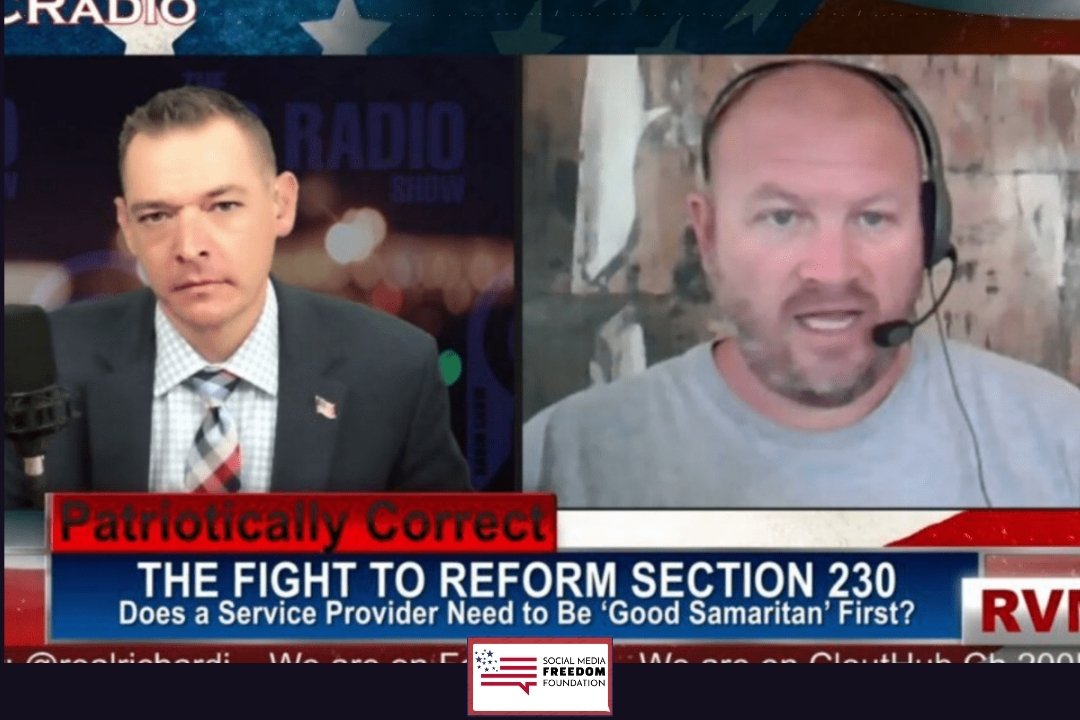
Jason Fyk is a Social Media Freedom Advocate and a Section 230 expert who is currently all-in with a legal battle against Facebook. Jason joined Stew Peters on PC Radio to discuss his battle and to take a deeper look at Section 230.
